When Marvel’s Midnight Suns was revealed sometime around the summer of 2021, according to this trailer, I found it to be an interesting concept. The trailer does not say much, of course, and I based my opinions on the first gameplay reveals that are harder to dig up now. My experience with tactics games is limited to the Divinity Original Sin series from Larian Studios, so I would hardly call myself a seasoned player. One of the two gameplay-focused YouTubers I subscribe to is, though, being an X-Com veteran, and he got to show off early gameplay and character deep-dive promotional content. He was even mentioned in the game’s credits, which is so cool. Therefore, I found myself exposed more to this game than I usually would.
As I always do with games I find intriguing but am unsure if I would enjoy them: I watch on YouTube and knew just the right guy for it 😉. I am not a deck-builder gamer, the gameplay loop looked like a lot of busy work, and some of the writing appeared… questionable. So, I stuck with watching, but the idea of the game never let me go. There was a lot to like, and I ultimately purchased a copy, as it occasionally happens in situations like this. Two, in fact 😅. When I decided to play for myself, the most affordable way was on the PlayStation 5, and this is where I finished the base game. After that, I wanted to play the DLCs and their story, and at that point, the Epic Games Store offered a deal for the Legendary Edition (base game plus Season Pass), which turned out to be as much as the Season Pass on the PlayStation store. With a 25% coupon Epic randomly threw my way as part of a Mega Sale, I obtained the Legendary Edition on PC for just under 38€. I think that is a perfectly acceptable deal 😁. It also allowed me to compare the console and PC versions in terms of performance and visuals, as I noticed a few things on the PS5 that I found curious.
(Three emoji in one paragraph 🙀. What’s my age again?)
Marvel’s Midnight Suns captivated me in a way such that it became an evening routine after work, workout, and dinner. It does have its flaws, as expected. However, the positive elements outperform the downsides, and since you seem interested, I will tell you about it.
The Nerdy Bits
As mentioned, I have two copies on two different platforms for comparison. Please do not expect a Digital Foundry analysis. I do this in my spare time when not gaming or working out, and I am not as equipped as the DF gurus. I am merely way too interested in technology to simply play a game like ordinary people would.
The PlayStation 5 version aims for 60 fps without any option for a high-fidelity mode at 30 fps. If you like it or not, you are stuck with fluid gameplay. I do not recall if I picked this up in a review or a video, but I think the resolution target is 1440p. It certainly looks this way to me. I would like to redirect you to this video for a broad overview in a non-textual form. It is the only one I could find that examines the performance and visual settings of the current-gen consoles. The creator even included power and framerate measurements similar to Digital Foundry. Besides the special offer on the PlayStation store, I based my purchasing decision on the performance numbers in this video.
Marvel’s Midnight Suns utilizes Unreal Engine 4, which should set off alarm bells for people familiar with the matter. On the consoles, the adverse effects usually limit themselves to traversal stutter when crossing invisible boundaries triggering the loading of new parts of a level. If a developer does not take special care on the PC, gamers are also confronted with shader compilation stutters that can severely impact the experience. Midnight Suns sadly walked right into this Hydra trap, and I will get to that later. Let me cover the PlayStation 5 version first since I have the most experience with it.
For the majority of the time, the game played great. Whether I was running around the grounds of the Abbey or battling armies of Hydra goons, the game barely skipped a beat. The exploration of the giant Abbey grounds surprised me the most. I would have expected horrible traversal stutters to be everywhere, but it was a genuinely pleasant experience. One thing to consider here is the main character’s generally fast movement speed, almost giving off Doom Slayer vibes. Running from one map area to the next did not take long. If there was any on-demand loading, it was handled graciously enough not to bother me much. The further I progressed in the game, though, I felt like the performance degraded. The doorway between the training grounds and the Abbey’s interior was the most noticeable invisible boundary. I am unsure whether I never noticed it earlier or if it really had to do with game progress. Whenever I ran out to Blade’s “Training Station” and then back in, the game would drop frames. Even manually saving the game’s current state took longer after 40 to 50 hours. It was a weird situation, and I am curious to see if the PC port also exhibits it. The game was never unplayable, mind you.
Framerate drops resulting from computational load during combat were rare, but they happened – albeit not as frequently as Tony Stark’s quips. Some of Iron Man’s aerial abilities and a few environmental attacks could cause the fluidity to clog up. I was surprised to already see this happen during the first tutorial encounter with Robo Iron Man and Doctor Spooky Strange when the game taught me to use the Aerial Superiority card. The combat stage was a simplistic desert adorned with a few rocks – nothing exciting or complex. Iron Man leaped into the air, and the game zoomed out to show the complete scene. The framerate tanked hard once Iron Man’s attacks landed explosively on the enemies, and physical destruction, debris, and alpha effects covered the screen. I occasionally had similar experiences when slamming destructible environmental objects into enemies that caused physics calculations and spectacular demolition. I also noticed that the final boss fight sporadically had difficulties staying at 60 fps with many giant enemies on screen when rotating the camera. Those were rare and select instances during battles, however, and the majority of the time, the motion was as fluid as enemy armor melted off by Captain Marvel’s Photon Beam.
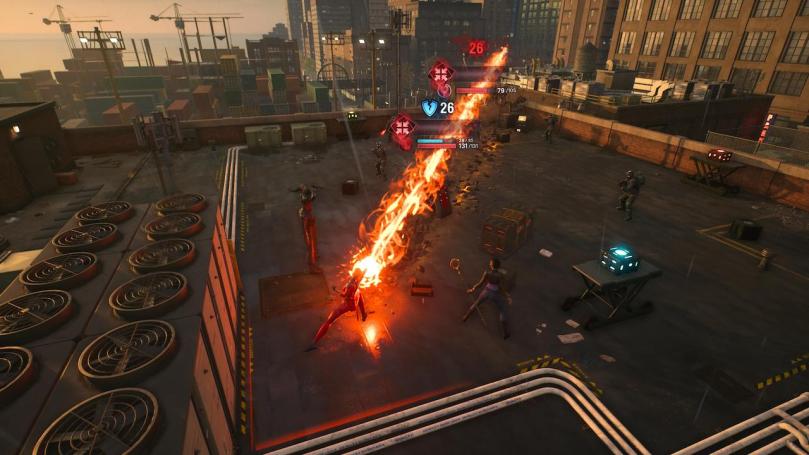
Now, here is where it gets interesting. Background character animations “far” away from the player were updated at a reduced rate. It was so low that even an untrained eye could spot it. Digital Foundry released a video examining the 60 fps update to A Plague Tale Requiem on consoles. One of the techniques utilized to achieve that performance jump was a reduced framerate of the swarm of rats. The developers used 30 fps instead of the full framerate to reduce rendering time in barely noticeable areas and directed those saved system resources at more important things. While I had difficulty spotting the difference in A Plague Tale, it was glaringly obvious in Marvel’s Midnight Suns. So obvious it could have been a segue in a Linus Tech Tips video. Sometimes I wondered whether the framerate even crossed the double-digit mark.

Marvel’s Midnight Suns did not aim for a highly realistic presentation, but despite that, character face textures also looked a bit blurry from time to time. I would assume this was an LoD thing or maybe just a bug. I have not yet noticed this behavior in my time on the PC.
In summary, the game looked and ran pretty well on the PlayStation 5. The only real downsides were the resource-saving trick for background characters and the occasional lower-res face textures. The infrequent performance dips were bearable since this was not an action game requiring fast-paced and precise movement.
The story unfolds differently on the PC, though. On the one hand, my PC managed around 60 to 90 fps without DLSS upscaling on the Epic preset. The performance was higher and a lot more stable. Once I enabled DLSS Quality mode, I got about 20 – 30 fps more on average without sacrificing perceivable visual quality. Only when I selected the Balanced or Performance option would I notice a lot of ghosting around the character moving the camera. My default is almost always DLSS Quality if a game supports it, even at 1440p. It generally does a better job of anti-aliasing the image and provides free performance. The native image looked just as stable, though, based on my brief testing.
In “the other hand” of the performance discussion, there is no way to avoid the shader compilation stutters. Firaxis tried their best, but it wasn’t perfect, unfortunately. It appears that the developers included a shader pre-compilation step on startup. This would be a good thing if the game had told me about that and shown me a progress bar. In that case, I would have gladly waited until it was finished. Instead, navigating the menu was a horrible and extremely sluggish experience. Color me surprised when I noticed how smooth the gameplay actually was. However, to get there, Midnight Suns appeared to be combining shader compilation and level loading. In the first hours, I usually run with MSI Afterburner displaying statistics, and during loading sequences, the game used about 30 – 40% of all CPU cores. Regular gameplay only saw one core being utilized to any degree. This resulted in loading times being much longer than on the PlayStation.
At the time of writing, I played about 18 hours on PC, and the loading times have normalized for the most part. The first boot into the game still takes disproportionally long. Every subsequent start of a mission is acceptable now, though. I would say loading times are slightly longer overall than on the PlayStation 5.
The worst part was watching the pre-rendered cutscene that saw Iron Man, Captain Marvel, and Doctor Strange teleport themselves to the Abbey to resurrect the Hunter. Audio and video were so far out of sync as shaders were still being compiled in the background. I am not talking about a few milliseconds here, so the lip-sync was slightly off. I am talking about full-blown grown-up seconds! The audio was way ahead of the scene on screen. Video cutscenes have been rendered at a low resolution, to begin with, so playback should run on a potato. The fact that it did not was a bad sign, and I wondered if I should have maybe purchased the Season Pass on the PlayStation.
Please take a look at the following screenshot. This was after the first mission with the Hunter returning to the Abbey. Low FPS, high CPU usage, stuttering. The scene itself did not warrant this kind of performance.

To boil this lengthy paragraph down to a free combat item card for easy use, let me put it this way. The first interaction with Marvel’s Midnight Suns on the PC was not great. The menu was unresponsive, the loading times had been pretty long, and some cutscenes stuttered as if their life depended on it. The minute-to-minute gameplay, however, was flawless. Exploring the Abbey grounds did not falter, and combat was always smooth, no matter the effect on screen. I remember watching gameplay on YouTube, where every attack would stutter for the first time the creator played the card. This has not been the case for me so far. Ignoring the main menu experience, Firaxis tried to hide the shader compilation in the loading screens, which is a neat trick. My only hope is that the game is done compiling at some point so the experience does not lag behind the consoles anymore. Because visually, the PC version is a lot sharper and smoother, and the background characters do not perform stop-motion animations.

Before I get to the good stuff of the technical presentation, I want to mention one more thing. When I played story missions, my band of heroes entered a portal from the Abbey and walked through Limbo to the mission area. The game accompanied these moments with dramatic music to build up tension. Once I stepped out of the portal, all the excitement was Hulk-smashed instantly as the music stopped and a regular loading screen appeared. This behavior was nothing game-breaking, of course. But Marvel’s Midnight Suns tried to get me pumped and ready for the next battle, and then the presentation fell on its nose, killing all anticipation instead of gradually fading into the mission.
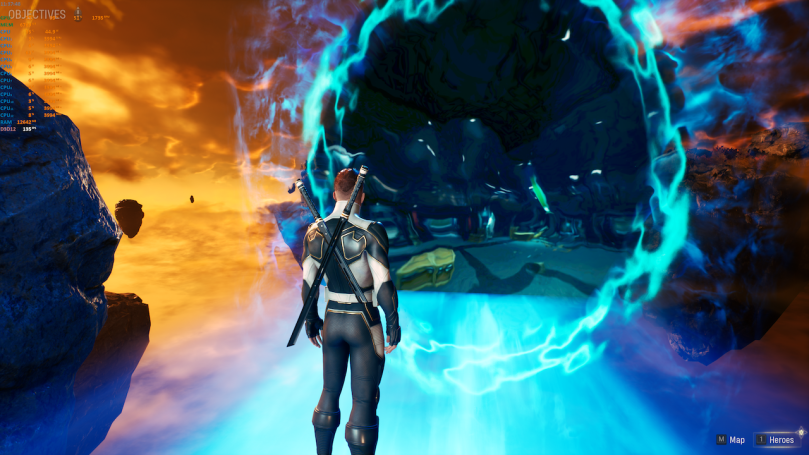
Enough of the doom and gloom, however. Here comes the good stuff. The first item on the list is the audio presentation, but I will hijack this segue for one more small section about a visual feature: raytracing. Midnight Suns supports ray-traced reflections and ambient occlusion. To keep this brief, here are two screenshots. You can figure out which used raytracing and which was rasterized based on the framerate.
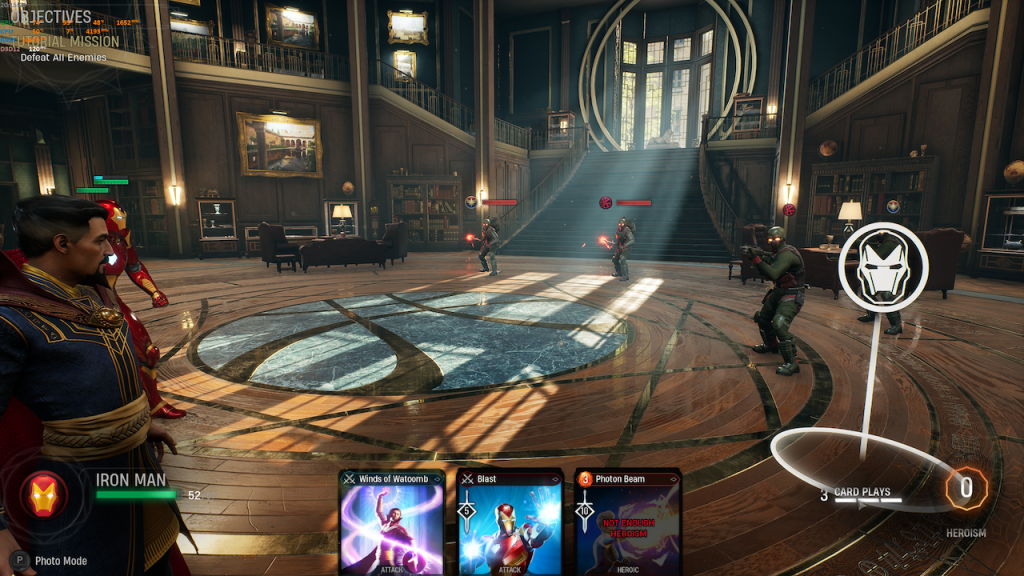
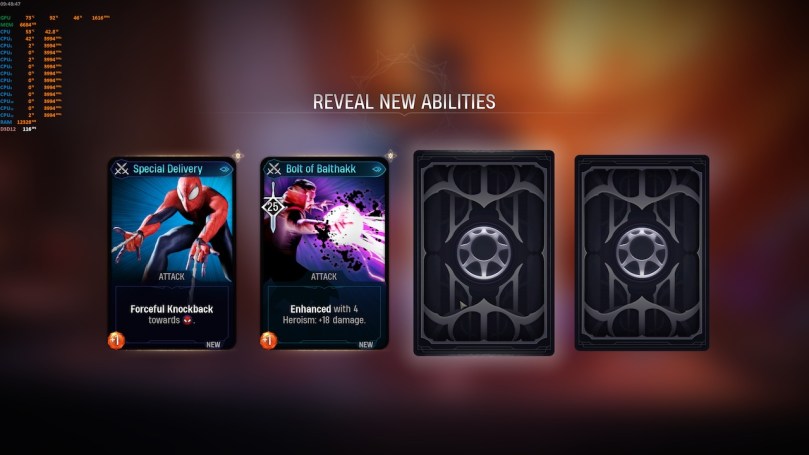
Now, let me discuss the audio presentation since that is the direct counterpart to the graphics. Positional audio was excellent, no matter the platform. I could not spot a difference between the PlayStation and the PC connected to my AV Receiver. Both correctly projected sound across the five speakers of my setup. Stereo also worked nicely, although that should not be necessary to mention. I also enjoyed the music and sound effects. It was your typical superhero bombast orchestral soundtrack mixed with Rock and Metal. I especially celebrated the soundscape of the final boss battle with a big grin on my face. My only complaint would be that the music did not sound as powerful as the sound effects of attacks. It is not about the quality and more about the perception. I presume it was done this way not to be intrusive, allowing it to fade into the background more and enabling players to understand dialogue better. The audio effects were outstanding, however, and very crunchy. It did not matter whether Blade fired his sidearms, the Hunter slashed somebody with his sword, or I revealed new cards in the forge outside battle. Everything had a weight and punch to feed dopamine to my lizard brain constantly, so I kept returning for more.
The voice acting in this game was also excellent, and the actors portraying the main cast were spot-on. I did not yearn for the movie actors to be in this game at all. The talent Firaxis recruited did an outstanding job. Whether it was necessary to include that much conversation in the first place is a different story for another section of the review. One might also wonder why a significant amount of the voice acting was very deliberate, drawing out conversations for longer than I felt necessary. I have heard people complaining about Aloy being very stoic. Compare her to Doctor Strange or Captain America in this game, and you will quickly realize that Aloy is a ray of sunshine and a spark of life. It is more of an artistic decision rather than one of quality. Just know that key heroes, including the male and female versions of the hunter, talked pretty slowly. Even Apple’s Tim Cook is an entertainer in comparison, and that is saying a lot.
Lastly, I want to comment on the support for input devices. On the PlayStation, there was only the PS5 controller, of course. The PC version seemed to be very liberal in its support, and it did so on-the-fly. I could connect and disconnect an original Xbox controller, a 3rd-party Xbox controller, or even the PS5 controller, and Midnight Suns immediately let me control the action. It is worth mentioning, as not every game does that. I am also re-playing Star Wars Fallen Order, and that title only accepts an original Xbox controller. Unlike Horizon Zero Dawn, Midnight Suns did not adopt the on-screen button prompts to the PlayStation symbols. What I found the most interesting was that gameplay felt better with a controller than with a keyboard and mouse. The controls are a bit clunky with the stalwart PC input devices. The menus were faster to navigate, of course, but the gamepad implementation is also perfectly serviceable. I actually recommend using a gamepad, even on a PC.
The length of this section makes me wonder if I should have turned it into its own journal page and hidden it in a random location on my blog 🤔.
Gameplay
In the introduction, I mentioned that Marvel’s Midnight Suns looked like a lot of busy work, and it was. The gameplay revolved around the notion of living from day to day – prep in the morning, punching Hydra dorks in the afternoon, and some R&R before bedtime. The Hunter got out of bed in the morning, visited Tony and Dr. Strange in the forge for research and unveiling of new cards, then lunge-walked to Blade in the yard for training and ability upgrades, studied intel on the way to Captain Marvel’s war room for hero operations, only to finally stand in front of the mirror table and start a mission. Afterward, which was coincidentally always in the evening, the Hunter got to socialize with team members and explore the Abbey grounds. Rinse. And repeat.
The social interactions served one purpose: upgrading the heroes. The higher your friendship with a particular character, the more potent the bonus stats they had. Upon reaching max friendship levels, I unlocked challenge missions for the respective companion that rewarded a powerful legendary ability and the Midnight Suns outfit.

All extraneous mechanics existed as a replacement for experience points and manually tweakable character stats. Heroes could level up, which gave them more health and something else I do not recall. Doing all the busy work was a means to become more proficient in combat, which is crucial on higher difficulties. On the PlayStation, I played the whole game on Heroic-1 as soon as it was offered to me, which is one step above Normal. On the PC, I am also experimenting with Heroic-2, which seems manageable, too. It is definitely a challenge and requires an intelligent combination of skills, attacks, and heroic abilities.
(And the luck of the draw.)
Combat was the absolute highlight of Marvel’s Midnight Suns, and it was a shame that the friendship simulator component of the game dwarfed it. Only when you play on a higher difficulty might you achieve a fifty-fifty split between socializing and battles. And that is only because combat will take much longer due to the increased challenge.
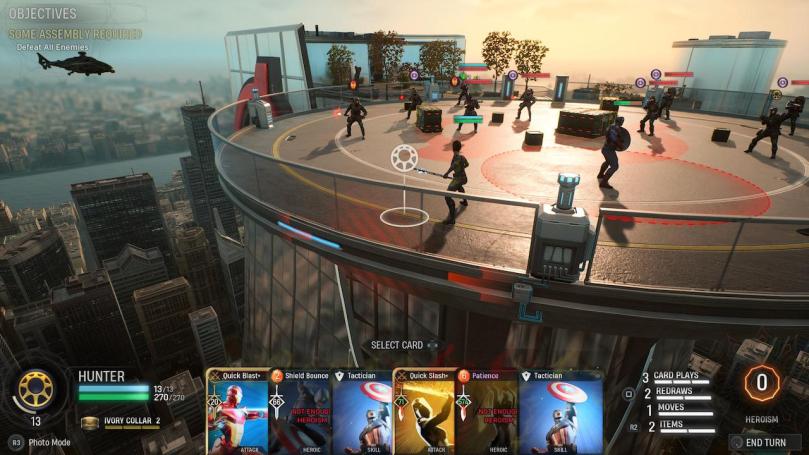
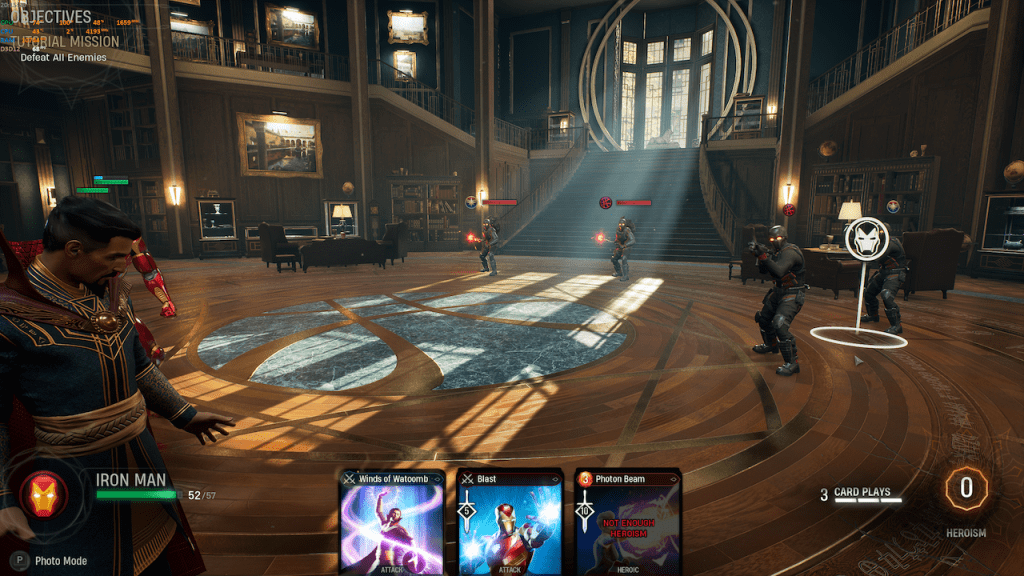
The most satisfying part was solving the puzzle that would lead to an efficient victory in as few rounds as possible. The moment when every card play turned into a series of well-orchestrated performances that saw the heroes come together in harmony, decimating the enemy’s forces with the precision of an ensemble being conducted by Death himself – priceless. Building the perfect deck and finding a group of fighters that complemented each other was the heart and soul of Midnight Suns. More experienced players that enjoy a true challenge should find enough depth in this combat system to make them very happy. I am convinced I only scratched the surface, as I primarily played direct damage cards and rarely utilized passive buffs. I figured that three card plays per round are insufficient to “waste” one card that does not do immediate damage. I am wrong, of course, but I am a simpleton, and at some point, a combat system is too deep and complex for me to dig deeper. I am more of an easy fun kinda guy. Work is complicated enough. I recognize what Firaxis did, however, and it won me over. This system was plenty flexible to be welcoming to beginners and multifaceted and stimulating enough for experienced tacticians.
But not just the tactical brain jogging got me hooked on Midnight Suns. Believe it or not, I also had a good time pretending to be friends with Tony, Steve, Carol, and the others, which is probably a controversial take based on what I picked up from other reviews. The developers did a lot right, and they also misstepped more than once. I will get to that in the next section. The game’s social aspect took an enormous amount of time, and it might even have been the biggest of the three pillars Midnight Suns stood on.
The third pillar, besides the combat and superhero friendship sim, was the exploration of the Abbey. Like a cat during nighttime, my Hunter prowled around the giant Abbey grounds to uncover a couple of mysteries. I like walking around to find lore and story. That is one of the reasons why I adore Horizon Zero Dawn. A big chunk of its story comes from searching ancient buildings, reading texts, and listening to audio recordings. It was done similarly in Marvel’s Midnight Suns, although what I found was not directly relevant to the main story. The mysteries revolved around why Wanda left the Abbey and why Lilith, the primary antagonist, was the way she was. What I found shed some light on the background and gave the game more depth. It wasn’t anything earth-shattering, but a welcome addition nonetheless.

The Abbey was essentially divided into four sections, each requiring a specific power to progress. To get that power, the Hunter had to find an item called Moon Seal and the magic door to a challenge by the ancient gods.
(No, not the Doom Eternal ones.)
After successfully completing the challenge, I could open more “doors” that blocked the path through the Abbey grounds. The developers also included a ton of random loot boxes and other collectibles hidden around the large area. Some contain actual interesting background information, while others existed for a reason I did not uncover. Other than maybe getting an achievement. The challenge missions were level-gated, so I had to progress the main game before I could continue exploring the world. As I alluded to, this part was absolutely optional, and the game even says so once you have finished all aspects of the tutorial. Firaxis slowly and steadily introduced new mechanics pleasantly and organically. It was explained in a text box, which I generally find to be a lazy solution, but it was non-intrusive.
The same could not be said about some of the character interactions, so let me get to the controversial part of Marvel’s Midnight Suns.
Story and Characters
The main story was standard superhero fare: a big evil villain threatens the world, and the heroes must unite to stop the cataclysm. Hydra wakened Lilith from her tomb to take over the world. Their vicious Pinky and Brain plot required the dreaded Darkhold to summon the powerful god Chthon and bring about the prophecy of the Midnight Sun. The only hope for humankind were not Marvel’s superheroes everybody had already seen in the movies. They played a role, but the star of the show was the Hunter, Lilith’s own child. As coincidence would have it, the Hunter was also resurrected from the grave to, once again, slay the lousy mom.

I am being a bit facetious, of course. After all, it is a superhero story, so take it with some humor. The plot did have a few exciting moments, though, and I certainly did not see the ending coming. Worth it.
So far, so good.
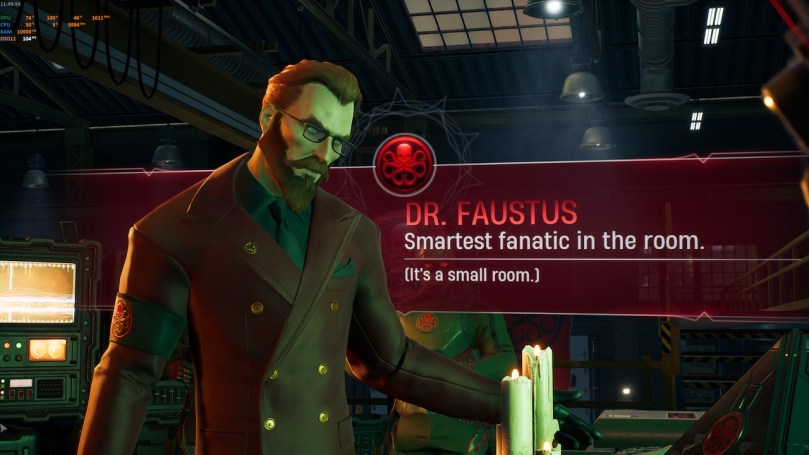
The controversial part about the story was not the story. It was the time I spent with the Avengers and Midnight Suns. Firaxis’ take on the characters during main missions was excellent and entertaining. However, life in the Abbey had its highs and lows, and the game designers took this whole friendship simulator thing several steps too far. It was literally a TV drama series, and many interactions only existed for that purpose. For example, Magick hated surprises, and her best friend threw a surprise birthday party. Guess how that went. Blade had a crush on Captain Marvel, and to interact with her, he created a book club because, apparently, she likes reading. But that is not all. Steve Rogers also joined, and Blade thought it was to be friends with him.
🤦♂️ 🙄 🤦♀️
First of all: who came up with this stuff? Secondly: the game’s premise was an ongoing apocalypse, and the heroes took their time to read and discuss books? To my barbarian brain, this did not make sense.
(The Blade-Cpt. Marvel romance is actually quite amusing and lovely.)
Another aspect I did not like about the writing was how Peter Parker and Robby Reyes were portrayed. From Insomniac’s Spiderman games, we know Peter to be smart, witty, and resourceful – a very likable character. In Spiderman form, everything was fine. But Peter was, and I hate to say it, an embarrassing dork in Midnight Suns. Robby wasn’t much better, constantly whining about feeling excluded and self-doubting himself.
(Maybe that is why they got along so well.)
Not everything was that bad, of course. But since this part of the game required so much time, such negative moments stood out as they dragged on for a while. The writers occasionally missed the target by a mile when exploiting character flaws for drama’s sake. It is a shame to say this, but the game could and should have been much shorter simply by leaving out a ton of unnecessary fluff and conflict. That is not to say that Marvel’s Midnight Suns did not have great moments and writing. It undoubtedly did. All the primary missions had been superb – hands down. The presentation was very cinematic and somewhat reminiscent of the movies. There was a lot to like here. I have spent 70 hours in the base game for a reason.
Famous Last Words
Obviously, I liked the game and would recommend it to everyone who enjoys tactics games and does not shy away from some cheap TV drama occasionally. You can certainly click your way past the boring stuff, of course. I am doing that in my second playthrough, where I want to focus on a higher difficulty and the DLCs.
(Deadpool is obnoxiously hilarious, by the way.)
When I look at the different experiences on the PlayStation 5 and the PC, I tend to recommend the console version if you are torn between the two. It was just way smoother from start to finish. The visual differences do not sway me enough, and although the PC code has calmed down after several hours of play, the first impression was terrible. You can no doubt get better visuals, and it even does raytracing. If that is what floats your boat, buy the PC version. Go console if playing the game is the only thing you care about. The controls are fantastic and better than using a keyboard and mouse. I would assume that the Xbox experience is similar to the PlayStation.
I know I ended on a bit of a sour note, but do not let that take away from the many positive aspects Marvel’s Midnight Suns has to offer. I was very quickly obsessed with the gameplay loop. And even if there occasionally was too much drama, baby, I liked the friendship mechanic as a way of leveling up your comrades-in-arms. The whole game design, from the flashy animations to the sound effects, is very addictive.
As a side note: I briefly checked how long my Horizon reviews had been, and I am surprised I came in about 800 words short of Forbidden West. After the Nerdy Bits, I figured I would match or exceed Aloy’s second adventure. That section alone is about 2000 words! I’m about 500 words past Zero Dawn, though. 4680 is the grand total.
Now you know.
Thank you for reading.
 The Codeslinger
[…] will try to keep it short this time, unlike in my Final Fantasy XVI or Marvel’s Midnight Suns reviews. I have linked to the Digital Foundry video in the intro, but if you have not already […]
LikeLike
[…] my review if you value […]
LikeLike