In my game reviews, I usually include a section I call “The Nerdy Bits” to examine a game’s technology. I have decided to separate this content from the game review to keep the size manageable. My Marvel’s Midnight Suns review showed me how an expansive technology section can inflate the blog post and maybe even distract from discussing the gameplay, the content, and the story, or potentially deter and intimidate readers because of the total length.
(This blog post is dangerously close to 3000 words 😉.)
I firmly believe that technology is a crucial aspect of a video game. Still, sometimes, I can get carried away and focus too much on it. Other people may not be as interested in that or as curious as I am, and they prefer an overview of the gameplay and a brief summary of the visual fidelity.
For me, a lousy running game can break the immersion. Take Elden Ring on the PlayStation 5, for example. My sister bought the game and thinks it runs fine, like many others who believe it to be the greatest thing since sliced bread. I took a 10-second look, turned the camera around one time, and concluded it ran like crap, and I did not want to play this way. Playing for ten to fifteen more minutes solidified this initial perception. This technology discussion is for gamers like me who are also interested in the technical aspects of a video game and base their purchasing decisions on that.
With this explanation out of the way, let me discuss what I think of Starfield’s technology. I will touch on the art style, the visual fidelity and technology, audio, and performance on Windows and Linux.
Please note that this is not a Digital Foundry-level inspection. For that, click here and here.
The Nerdy Bits
Let The Numbers Do The Talking
Starfield’s performance was a point of contention after its release. AMD GPUs performed exceptionally well, whereas their CPUs did and still do underperform compared to what they are usually capable of. It is as if Bethesda, a Microsoft studio, has yet to learn that Microsoft’s Xbox consoles run on AMD processors 🙄. In short, Starfield likes AMD graphics cards and Intel processors. Hardware Unboxed conducted an extensive investigation at launch and summarized their benchmark results in several videos. The CPU aspect is tested here, and the GPUs are in this video. The latter also exists in written form on Techspot, if you prefer that.
The first patch improved performance across the board. Despite that, I did not notice much difference since my system already ran well enough because of the Radeon RX 7900 XT. Your mileage may vary, especially when rocking an NVIDIA graphics card.
However, that does not mean I have nothing to complain about. Performance drops are most common in the big cities of Starfield. Running across a planet’s flora and fauna (or lack thereof) can also incur stutters, although less severe than in the cities. The game’s world simulation and asset streaming were apparently pushed to the maximum in these locations. Like in many Unreal Engine games, traversal stutter is incredibly noticeable and exaggerated on lower-end processors. My almost lowest-end AM5 Ryzen 7600 CPU was a bottleneck in such areas. Starfield eats CPUs for breakfast and maxed out my unit most of the time. Digital Foundry tested the beta patch (now publicly available) on a few chips and saw an improvement in all scenarios. It did not eliminate the frequent stutters in large cities, though.
Limiting the game to 60 fps gave my CPU more breathing room but did not entirely solve the issue. Only a more powerful unit might have better luck. On the other hand, exploring caves, factories, or the various shootouts ran very smoothly.
I promised some numbers in the introduction, so here you go. I performed two tests, one in New Atlantis and one on the Planet Polvo outside of a research station where vast vistas, a lot of vegetation, and wildlife were on screen.
I ran the tests thrice per location and operating system and averaged the results. Please note that the tools used reported the 1% lows differently and might not be 100% comparable. I utilized AMD Adrenalin’s logging feature on Windows, and on Linux, Mangohud did the trick. I ran Fedora 39 with Kernel 6.6.7 and KDE Plasma on Wayland.
I tested the game on Ultra and disabled FSR upscaling.
| New Atlantis | Polvo | |||
|---|---|---|---|---|
| 1% Low | Average | 1% Low | Average | |
| Linux | 52.1 | 74.5 | 59.1 | 96.6 |
| Windows | 62.1 | 76.9 | 81.4 | 100.3 |
As you can see, the average framerate was very close. Where Windows had the edge was the 1%-low number. I assume the general high CPU utilization in the game negatively affected the emulation performance, and I felt it while playing. The game was so heavy on the processor that there was less time for Proton and XWayland to do their magic. However, if you want to play on Linux, you can. The game just ran, and with a bit of tweaking or a beefier CPU, you might not even have any issues. An Xorg session might also perform better because of one less emulation layer.
If I recall correctly, the 7900 XT also ran the game nicely on my 4K TV at 60Hz, with FSR set to 80%. Speaking of which, FSR worked very well, even at 1440p, and that was because I could choose the resolution upscaling level in percent, not just a pre-defined quality mode. 90% netted a small amount of performance while looking essentially the same as the native rendering.
Easy On The Eyes
Did the visuals at least match the performance on display? Well, that depends on how you look at things. Starfield did not push technical boundaries like Cyberpunk 2077, Control, or the more recent Alan Wake 2. It was still a beautiful game based on its art design.
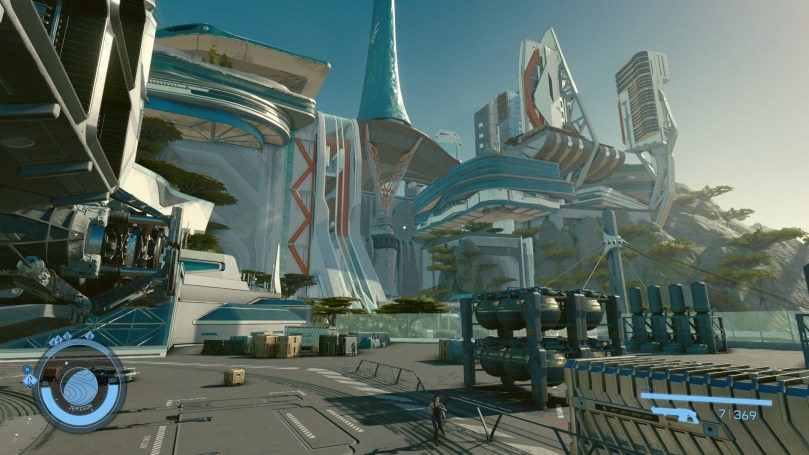
Bethesda’s artists cleverly combined a minimalistic and futuristic look blended with different themes based on the planet I was visiting. The game contained a lot of smooth metal surfaces in all its structures. At the same time, the art reminded me of Fallout 4’s retro-modern look with many rounded corners. It was modern and clean. The art style had its own charm and carried the whole game.
New Atlantis, for example, was colorful.
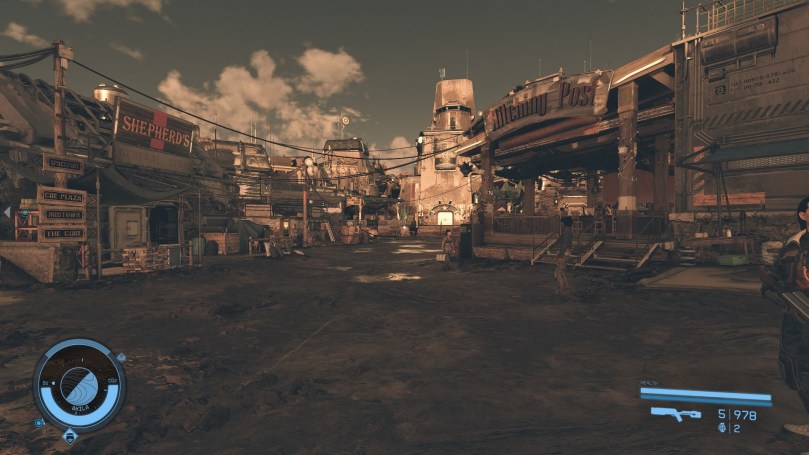
Like the Firefly TV show, Akila was reminiscent of the Wild West.
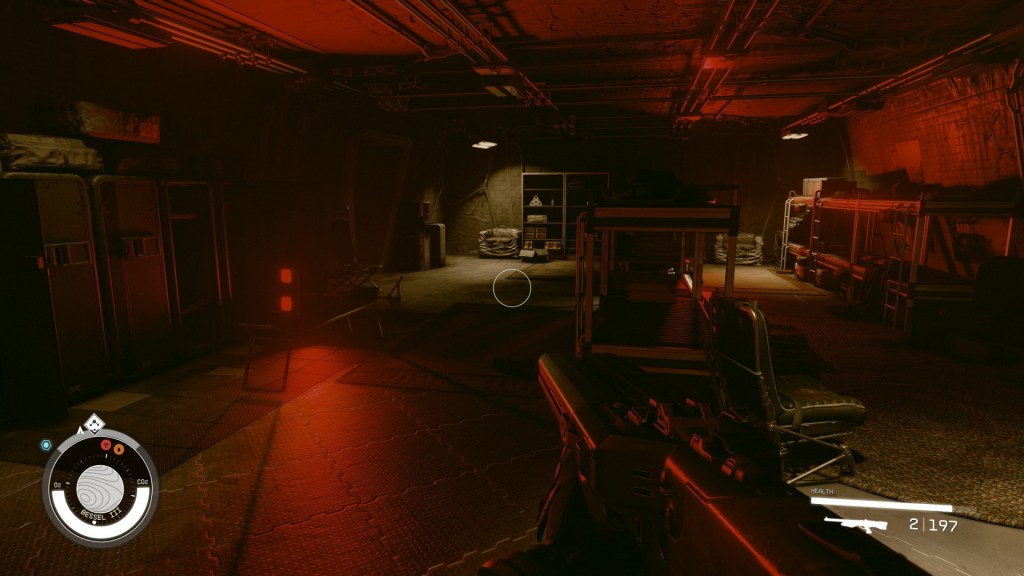
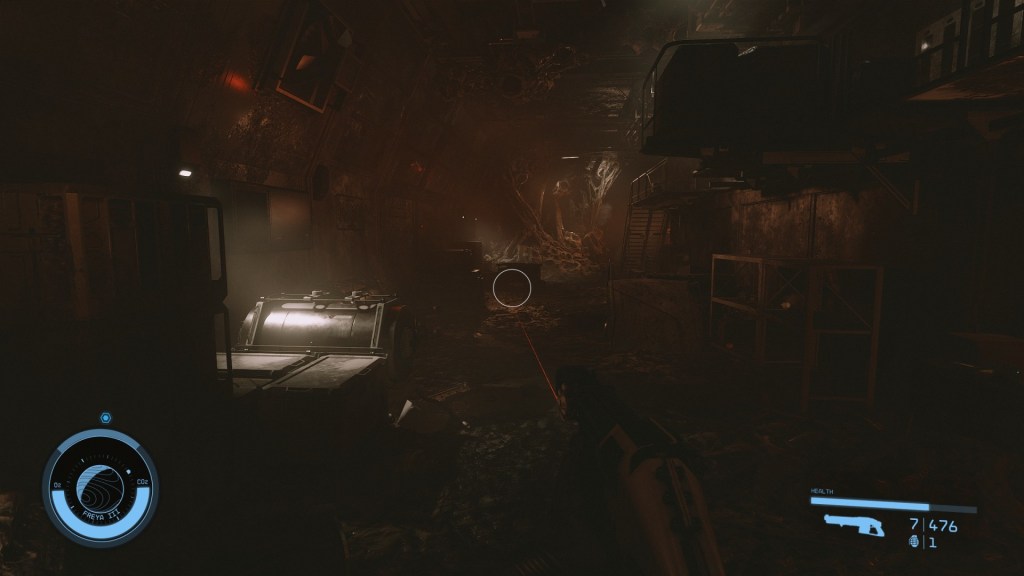
Then, random abandoned factories and mission locations were much more atmospheric, cold, and dark.
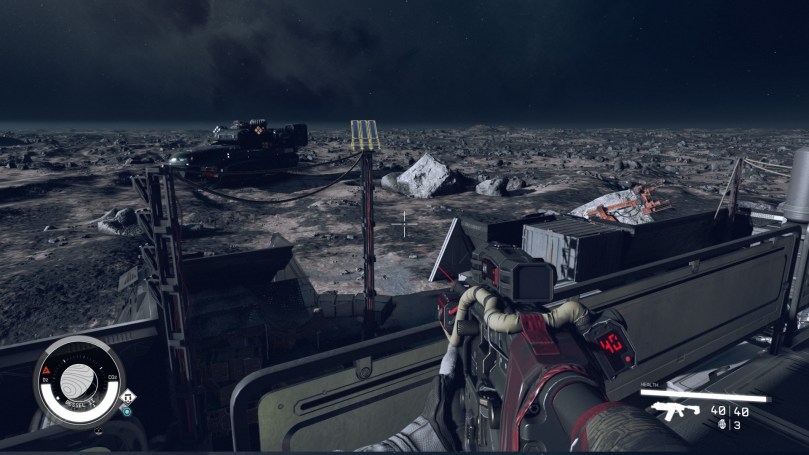
Sometimes, the barren surface of a planet was also attractive. Have you ever wondered how it must be up on the moon? I imagine it would look like this.
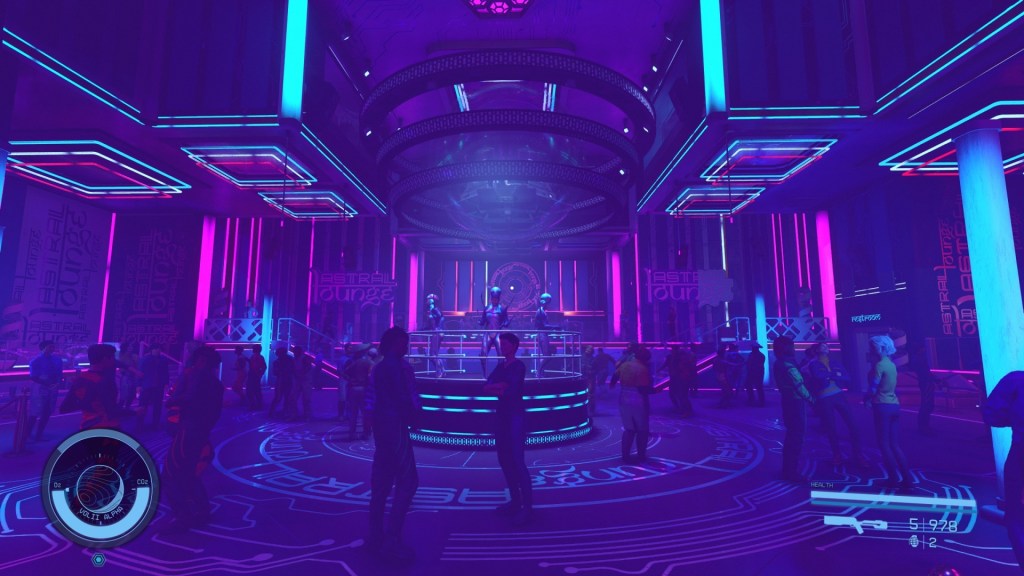
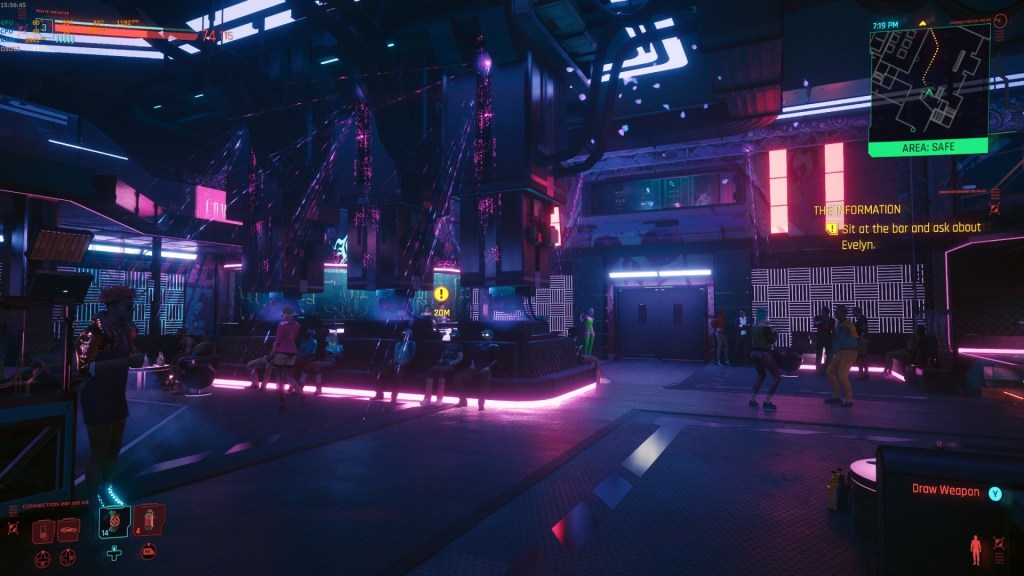
As cohesive and appropriate as the graphics looked, there was one area where the Creation Engine was lacking. Lighting. I only really noticed this when visiting the Astral Lounge on Neon. The scene did not look like a giant bar with colorful lights illuminating the dance floor and spilling into every nook and cranny. It appeared as if Bethesda only applied a purple filter to everything to simulate neon party light and atmosphere. It always looked wrong to me. Once you have played Cyberpunk 2077, you know how proper artistic and technical employment of light looks.
Lastly, I would like to emphasize how much fine detail was strewn across the enormous amount of locations. Wherever I went, odds and ends were lying about to breathe life into these areas. However, Starfield was not comparable to any Unreal 5 games I have seen and played so far (still playing Immortals of Aveum, seen Remnant 2 footage, watched Lords of the Fallen playthrough). Those titles render so much more detail overall, almost to the point where they look overwhelmingly cluttered and busy next to Starfield. Bethesda’s space opera was full of clutter, too, but the art style their artists employed could make it appear sterile in comparison. Which it wasn’t. It was merely different and detailed in its own way.
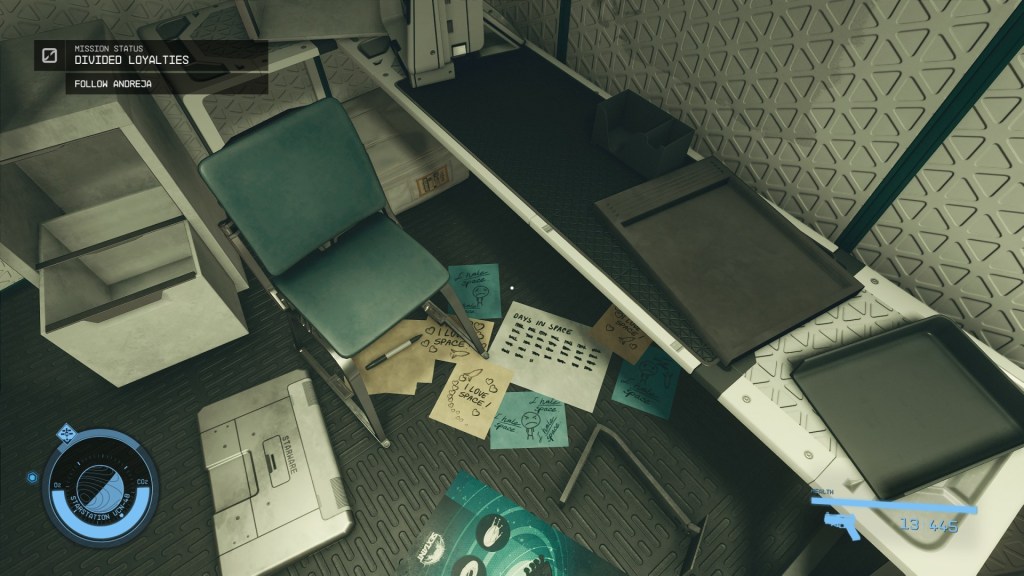
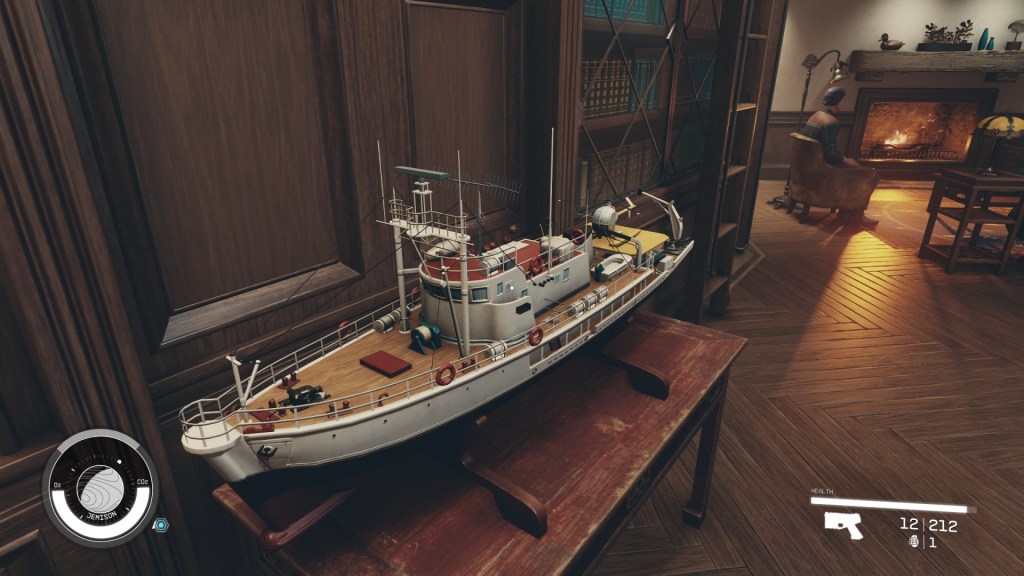
Starfield was not the flashiest game I have ever played, but it was beautiful in its own right. The most surprising aspect was the facial animation in dialogues. Early screenshots or gameplay footage looked underwhelming and off-putting. After I saw it with my own eyes, I was actually impressed. I would even go so far as to say that Starfield had one of the better lip-sync implementations I’ve seen that year. It mostly came down to a couple of crucial letters, like “P,” “M,” and “O.” Lip movement may be exaggerated, yet it hit the mark consistently.
Although the conversation setup was still rather stiff, with the fixed frame and forced focus on the counterpart, chatting with people was as immersive as this setup allowed. In comparison, Cyberpunk was more natural from moment to moment, and Horizon Forbidden West still remains queen on the throne.
A Treat On The Ears
The first time I played Starfield on my TV connected to the AV Receiver, I was greeted by a soft and casual bass from the subwoofer in the main menu, which excited me. I have good headphones, but the force of a subwoofer is something else. However, I appreciated that Starfield did not rely primarily on the bass channel during action scenes like Final Fantasy XVI. The sound was much more nuanced and appropriate to the setting. Guns felt good to shoot and also sounded powerful – from a small handgun to a double-barreled shotgun.
The music ranged from relaxed and curious exploration to energetic and intense combat music. It is worth noting that the soundtrack bundled with the game’s Premium Edition is not worth the money. The music on its own is not very entertaining and only works well in the context of the game, where it is perfect.
Starfield produced a proper surround experience when connected to an AV Receiver by utilizing the center channel for conversations and the rear channels for more immersion. I love it when games do that. And that is important, too, because this game contained so much voiced dialog. Every NPC I talked to, from the lead voice actress Emily O’Brien as Sarah Morgan to any random bartender on a random planet, I always thought the voice acting was high quality. This was impressive, considering this title’s seemingly endless number of conversations.
I liked the overall audio presentation. It was always on point, no matter the situation. Exploration was easygoing or inquisitive, combat was energetic, and the game contained a few dark and atmospheric moments equally accentuated by ambient sounds. Especially noteworthy were random starships landing on and leaving from planets while I was exploring. The soundscape this generated was impressive and deafening.
In Control
An important aspect of a game is that I can seamlessly switch between inputs whenever I please. That is the beauty of the PC platform. I have the stalwart keyboard and mouse peripherals and also the option of a controller. Starfield supported both very well, and the control scheme translated nicely between the two.
There were exceptions, unfortunately. First, the jump button on the controller was Y instead of A. Y was that? Jump is always A. After I changed that, I noticed that I could not land on planets anymore because I could not select the locations. This strange bug forced me to live with the odd button layout. It actually led me to utilize the additional buttons on the back of my Nacon Xbox controller instead. However, I prefer the PlayStation 5 controller for longer sessions, and I do not have the option of back buttons available there.
The shipbuilder’s controls were extremely clunky and cumbersome, and positioning the camera consistently defied my brain’s movement logic. Something was always off, no matter how I changed the camera inversion controls. Either the game’s planet rotation or the shipbuilder interface threw me off. Regardless of the input method, I never found a setting that worked well everywhere. But it was not only that – although it was the most significant contributing factor to me barely modifying my ships. When gaming with a keyboard and a mouse, the interface was not adaptable enough to be comfortable to use. It still utilized the controller navigation only with a mouse for rotation and zooming. I have yet to use modern 3D modeling software like Blender. Still, I suspect that nobody would use such software if it were controlled like Starfield’s shipbuilder. I cannot speak about building outposts, as I have never done that.
Focusing on the core gameplay, the controls worked very well. As a shooter, Starfield worked perfectly with a keyboard and a mouse on a PC. It essentially adhered to a standard keyboard layout without upsetting decisions like the Y fiasco. But it also controlled exceptionally well with a gamepad. Movement and aiming were direct and precise, as they should be, and exploration with a controller was more immersive and enjoyable this way for me. But even the gunplay and combat worked flawlessly. I played the majority of Starfield this way.
The Fast-Travel Simulator
Like it or not, you will do a lot of fast traveling in Starfield and see many-a-loading screen. I will not discuss the impact on gameplay here. Instead, I would like to highlight the loading times. Bethesda did a good job keeping the time spent staring at black screens short. The game loaded very quickly into the main menu, and from there, it took only a few seconds to load a save game. The same was valid for entering and exiting buildings or traveling between planets. Admittedly, Starfield resided on a PCIe 4.0 SSD on my Windows installation. I experienced the same behavior on Linux, though, which runs off a PCIe 3.0 SSD with around half the speed (ca. 3.5 GB/s read).
The game was not seamless, but it loaded quickly enough not to be overly intrusive.
Exterminator Required?
I have never played a Bethesda Game at launch before Starfield. As such, my experiences were usually based on heavily patched versions. With this in mind, Starfield was relatively bug-free based on my experience and what I have heard from other outlets. I have not encountered anything game-breaking, but I also have seen streamers with very early access struggling with a few issues, like people appearing where they were not supposed to or they could not talk to a character to advance the story.
The worst thing that happened to me was a spaced door. Luckily, airlocks were cosmetic in nature and not functional – other than opening and closing.
(This would have been very awkward for the inhabitants.)
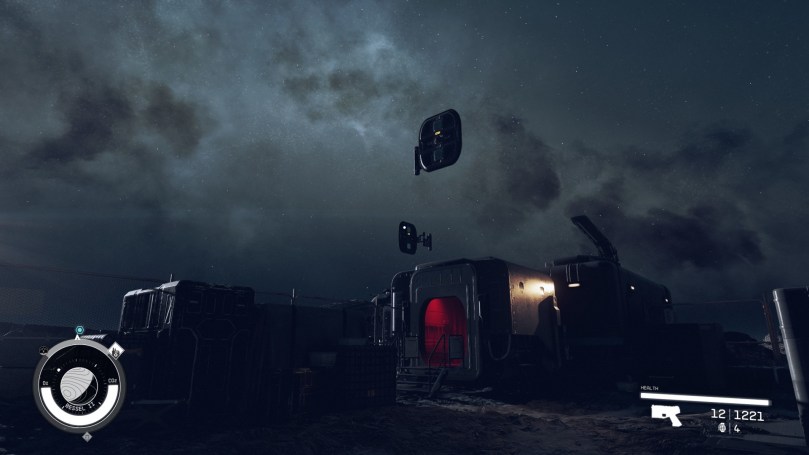
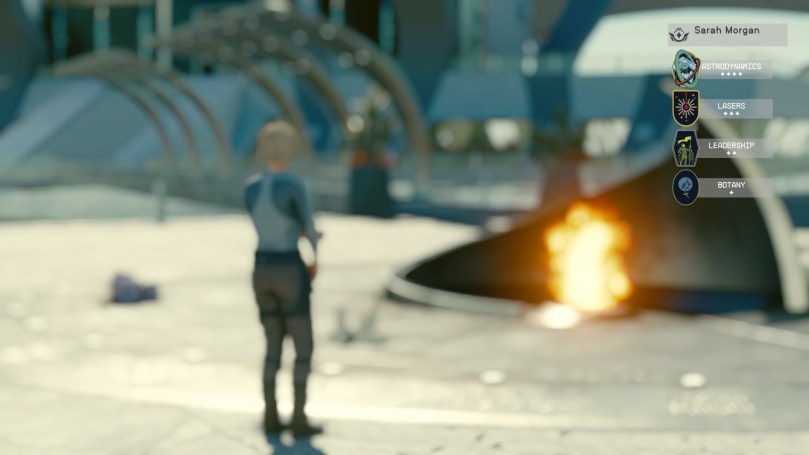
Then there is what veterans of Bethesda games call “the Bethesda jank”. Weird behavior that does not break the game per se but is unintentionally funny or sometimes detrimental to the immersion. Like the Skyrim physics system defying its own laws when running above 60 fps. As part of a quest, Sarah was mourning at a memorial in New Atlantis, which should have been an emotional moment. The out-of-focus camera destroyed the somber atmosphere, however.
The Bethesda Jank usually results in NPCs not properly stopping their animations and continuing to walk toward or away from you, twisting their heads awkwardly when you chat with them. Or other NPCs walking between you and your conversational partner, NPCs standing on chairs, and other odd stuff.
I have seen all of this on occasion. While it is sad that issues like this make it into every new release of the Creation Engine, it is not the end of the world. It did have problems with MSI Afterburner early on, resulting in random crashes. After disabling it and utilizing AMD’s performance overlay instead, I had no more problems. Overall, Starfield was a solid experience.
Famous Last Words
I can understand why people question Starfield’s performance profile and technology. It did not push visual boundaries or try to achieve technical marvels like many other contemporary entries. However, focusing solely on the technical aspects is short-sighted. Starfield was more than just its engine, although some decisions may make your head scratch. Why wasn’t there DLSS support from the start? Why did the developers call the game “optimized” when the first patch squeezed measurably more performance out of the same hardware?
Criticism was definitely warranted. Unfortunately, modern Internet culture only sees black and white and deals in extremes.
Starfield was a beautiful game when looked at holistically. The art direction was incredible and created a very cohesive and immersive futuristic world. Starfield looked excellent without being spectacular. It was a heavy game, much like its Unreal 5-based peers, but the first impression was much less flashy.
I liked Starfield’s look and was lucky enough to overcome the system demands with a small shopping spree at an online hardware retailer.
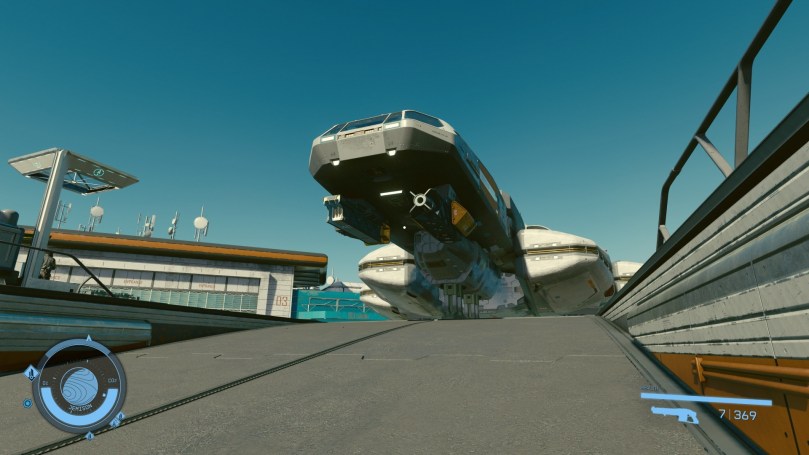
Consider this: how many games manage to convey the enormousness of a spaceship like this?
Thank you for reading.
 The Codeslinger
[…] have outsourced this section to its own blog post to streamline this review. If you are interested in more details, please read […]
LikeLike