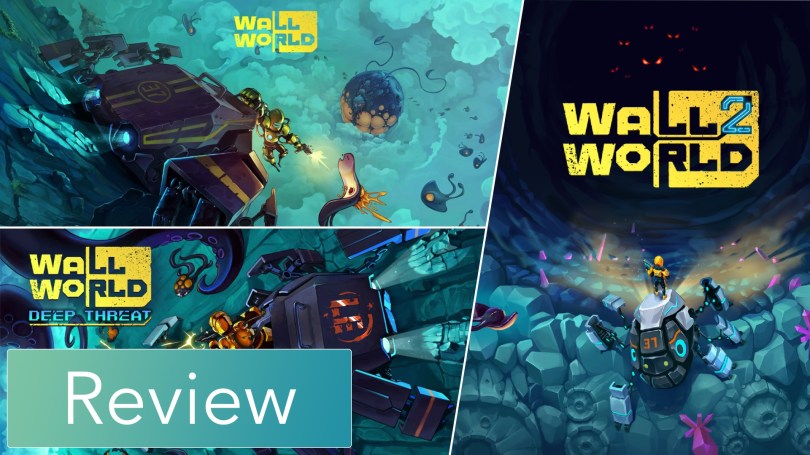
Wall World 1 + 2 Review: From Addictive Gameplay to Mission-Based Storytelling

Most gamers probably know that particular feeling that old games like the original Diablo series evoked in us. We always used to say: “just one more dungeon” or “just one more quest”.

It’s this feeling wanting to continue a game no matter how long you already spent in front of the tube or how low the sun is on the horizon. It’s this feeling of slicing through hordes of enemies with a friend, hunting for the next level-up, finishing a quest, or just enjoying the gameplay because it’s hell-a-fun.

It’s this feeling… that barely any game could elicit in me recently.

I’m not saying I didn’t have no fun in any game. That’s not the case, and it wouldn’t be fair to any of the titles I’ve finished. However, only a tiny number was so captivating that I couldn’t stop playing or wait to get back to the living cable box.

After all this prologue, you can probably guess where this is going. And you’re correct. But before I get to that, I need to tell you how I ended up playing Wall World in the first place.

😅

The answer is YouTube, of course. One of the two gaming creators I follow started playing around the day of Wall World 2’s release. I saw it as nice white-noise programming while I was doing other things. But the more I took in through osmosis, the louder “this feeling” came back, knocking. As a consequence, I picked up Wall World 1 and 2 during the Steam Christmas sale and also added the Deep Threat DLC after beating the first title.

I also have a German version of this video.

Read More »

Marvel Rivals Benchmarks: AI Super Villain or Open Source Hero | Windows vs. Linux | RX 9070 XT

Marvel Rivals is published by NetEase, the same company that also publishes Where Winds Meet. Unlike its sibling, Marvel Rivals uses Unreal Engine 5. And as we all know, this piece of software can be as volatile as Deadpool. So, let’s have a look at how the hero-shooter performs on Linux and Windows.

Welcome back to a new benchmark battle between these two operating systems. Today, we answer the question of whether the proprietary AI-Super Villain or the Open-Source hero comes out victorious.

As I’ve done more often recently, I compared the beloved 🤭 Windows 11 to Bazzite’s Steam Gaming Mode and its KDE-Wayland session. Let’s go and find out which operating system has a field day in Marvel Rivals.

To do that, we grab Thor’s Hammer – don’t worry, no sleezy jokes today – and hope we can prevent Windows from sprinting ahead with a few well-placed lightning strikes.

I actually have no idea if Thor’s even in this game, but let’s just ignore that.

I also have a German version of this video.

Read More »

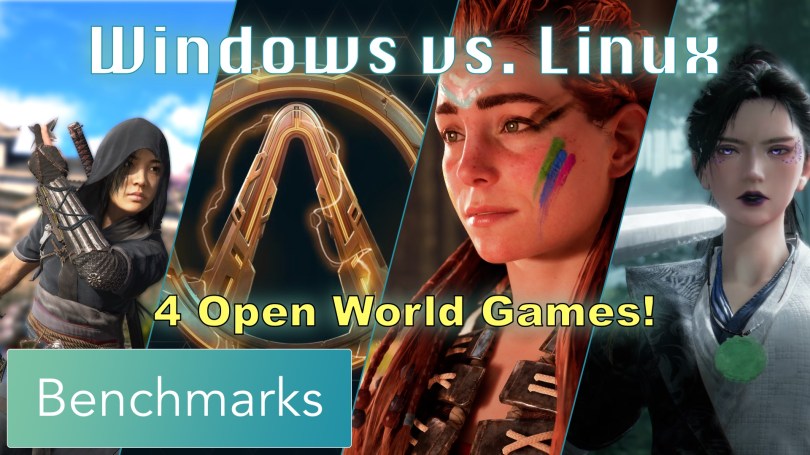
4 Open-World Titles In Linux vs Windows Benchmark Battle (ACShadows, BLands4, HFW, WWM) | RX 9070 XT

I had a few games in my sweaty grasp this year that ran rather meh on Linux. In the last game I analyzed, I found out that the Mangohud performance overlay can negatively impact a game’s performance. Hogwarts Legacy stuttered heavily in my first test when I explored the world. This is a behavior that you wouldn’t encounter when just playing the game. I only ran into this issue because I always show the Mangohud performance metrics for my analysis videos.

That sparked a desire to retest a few games. I was already planning to benchmark Borderlands 4 a second time since Gearbox supposedly tuned the transmission for better performance. It so turned out that Borderlands 4 was joined by the robo-dinosaur-tamer Aloy, the two mass murderers Naoe and Yasuke, and the dude who fights with a baby in his arms.

And with that, I welcome you to another Linux versus Windows benchmark battle. This time, with four games instead of just one.

I don’t want to waste any more time beating around the FPS, so let’s get right to it.

I also have a German version of this video.

Read More »

Pragmata: The RE Engine Delivers! | RX 9070 XT Linux Performance & Impressions (Bazzite 43)

(World Premiere)

Alright, alright. I admit, I’m exaggerating here. It is true for me, however. The unique thing about Pragmata is its use of the RE-Engine, which is like venturing into new territory for me. I have avoided the Resident Evil games and, by extension, the RE Engine because I’m officially in the scaredy-cat camp when it comes to horror games. As a result, Pragmata shines among the many Unreal-based stars in outer space.

And with that, hello and welcome to a Linux Gameplay Performance blog post.

The Pragmata demo was announced at The Game Awards 2025, and the game is slated for release in April 2026.

Will Pragmata’s launch into the Linux universe be soft, or will the trek to orbit be a rocky one?

Here’s a German version of the video.

Read More »

Total War: Three Kingdoms Benchmark-Battle Linux & Windows | RX 9070 XT (Bazzite 43)

If you regularly watch Gamers Nexus benchmark videos or are just a strategy game enthusiast, Total War may be a name you recognize. It has been quiet as far as “Mystery Games” go in the Epic Games Store, but at the end of the year, Tim Sweeney handed out a household name in the strategy space for free. I took this opportunity by the hand to check out Total War for myself and, of course, also benchmark it.

And with that, I welcome you back to another Linux versus Windows benchmark battle.

I usually prefer to do a Gameplay Performance first, before diving into the benchmarks. However, I’m sad to say that Total War: Three Kingdoms just isn’t my cup of tea. Therefore, I spent only as much time in the game as I needed to record some B-roll and get the testing done.

But enough foreplay. Let’s get to the climax and the question of who’s packing more heat.

Yes, you heard that right. And there’s plenty more where that came from.

(German version of the video)

Read More »

South of Midnight Benchmarks & Critique (Linux vs. Windows)

Compulsion Games and striking art might as well be synonyms in dictionaries. South of Midnight’s visual identity is unmistakable, but it does not stop there. The game is more than just artsy graphics.

But before I briefly share my opinion on the game, let me talk about the technical side of things, which is central to this blog post. The primary focus is how South of Midnight performs on Linux and Windows, how difficult it was to get working, and things I noticed while playing on both platforms.

The Nerdy Bits

I purchased the game on Steam, and as one has come to expect, it just worked. I did not force any Proton version and let Steam do its thing instead. Throughout my playtime, I did not have any issues whatsoever. South of Midnight felt like it belonged.

Read More »

My Year In Video Gaming 2024 – Game Of The Year And More

2024 was just like all the other years regarding my game selection. Barely any of the titles I played were released in 2024. Final Fantasy 7 Rebirth is the only new game, and Horizon Forbidden West on PC was just a re-release on a different platform. I was debating whether to continue this series, especially since the end of the year was not the best time health-wise. Motivation to play or write was nonexistent.

Before trying to squeeze any more semi-interesting words out of my fingers and waste everybody’s time, let me summarize the games I played.

Read More »

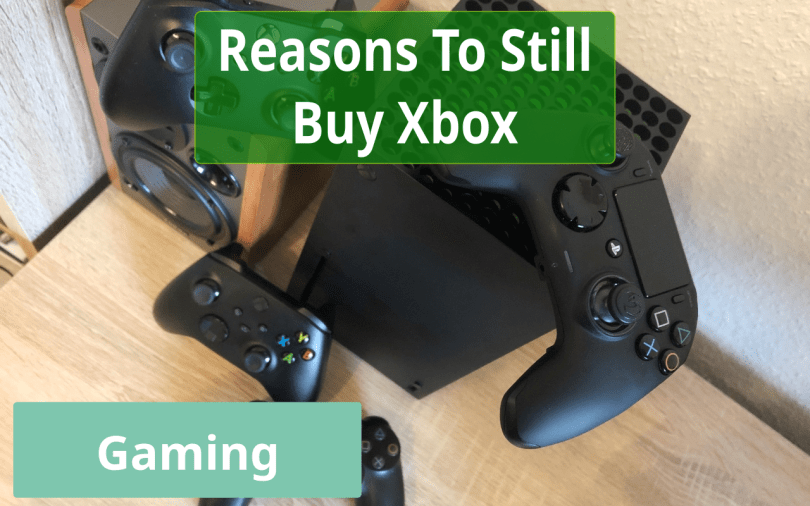
Why Buy An Xbox When Games Are Released On PlayStation? Here’s A Thought.

Xbox has changed its strategy and started releasing games on other platforms previously exclusive to the Xbox. These moves have caused some unrest among Xbox fans, who have voiced their dissatisfaction on social media. This has been especially true since the announcement of the Indiana Jones game, which is a major upcoming title for Xbox. My exposure to all of this is all hearsay through podcasts and reports in YouTube videos. In these discussions, very few people can (or want to?) find a convincing reason that answers why you should still buy an Xbox. I have a few ideas.

But before I share them, I would like to briefly rant about the notion of being disappointed and now questioning the point of owning an Xbox. So, please stay a while and listen.

(Or rudely skip ahead to the “Pro Xbox” section.)

PlayStation Envy

I am baffled by any outrage because of this. Shouldn’t we gamers be happy for each other? Now, more players can also enjoy the great games that have only existed on an Xbox (not all, of course). The idea of being a fan of a brand, a.k.a. a giant corporation accountable to shareholders, is beyond me. How can it be so simple to shake this loyalty? Is it a form of schadenfreude that turns people into Xbox fans because they know that PlayStation owners do not get access to certain games, like Halo, Gears of War, and other exclusives? Is it jealousy, as the other platforms will soon have more games available to them?

What made people choose an Xbox over a PlayStation in the first place? Was it only the games? The pull of the Xbox exclusives must have been stronger than Sony’s portfolio. If so, it’s not like releasing more titles on Sony PlayStation and Nintendo Switch removes them from the Xbox platform. And if games weren’t the reason, the other arguments favoring an Xbox would not change. Right?

Read More »

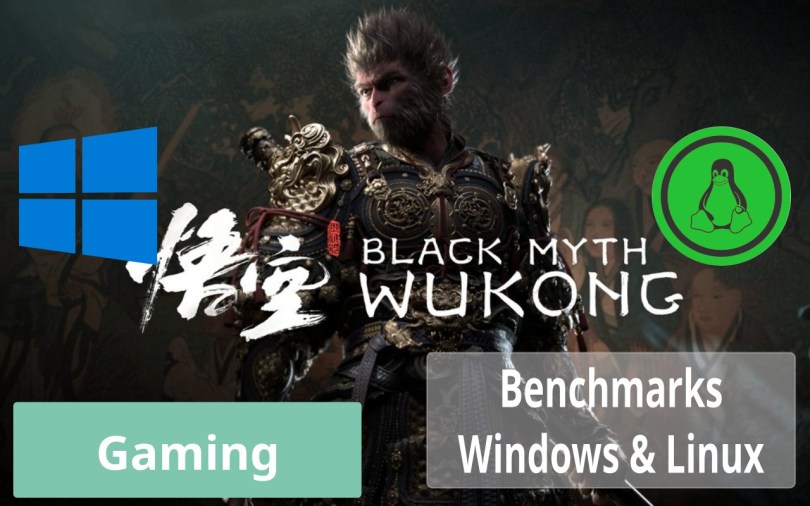
Black Myth: Wukong PC Technical Discussion (Linux + Windows Benchmarks)

The hype around this game may have subsided, but I thought it would still be fascinating to test Black Myth: Wukong on Linux and Windows and see how both operating systems fare. Games Science’s handy benchmark utility was a perfect tool for the task. I was not interested in realistic gameplay benchmarks, so a built-in canned benchmark was perfect. What started as a simple run of the benchmark with different settings turned into a discovery of some unexpected behaviors that piqued my curiosity.

Read More »

Alan Wake Remastered Review (PC)

The gamer thought he knew what to expect. After all, he had watched a playthrough of the Xbox 360 version so many years ago. In truth, he had no idea.

Alan Wake had been a successful game. It sold over three million copies. Critics loved it. Players loved it. There was a huge fanbase around it. Still, the remastered version was slightly less well-received. It was a technological overhaul, more suitable for modern systems, while the gameplay was still the same old same old.

As the gamer fought his first battles, a realization set in. The controls were clunky, even odd at times. He had to retrain his brain to make things work. Dodging and sprinting were activated by the same key. „Why would the game do such a thing?“, the gamer wondered. The way he controlled Alan was unlike anything he had ever played. Alan was a writer, not a superhero. He was less athletic than a boulder chasing a famous fictional adventurer through narrow caves. Running was a futile endeavor. Any such attempt was quickly responded with heavy panting by the protagonist, Alan Wake.

The game did not want to be fast-paced, did not want to be a shooter. It was a supernatural mystery thriller with action elements. The beam of Alan’s flashlight was the game’s version of a reticle. The gamer thought this was a clever idea. He also didn’t like it as it made him feel vulnerable, not always in control. That’s what the game wanted him to feel.

Not in control.

Helpless.

The game’s story evoked similar feelings on an intellectual level. It was deliberately convoluted. It contained a meta narrative that foretold the story while the gamer experienced it on screen. He was dreading the moments of instense combat the game foretold. But how much of it was real? Was any of it real? This was unlike anything the gamer has seen before. He was wondering how the pieces fit together, how it all made sense. Would there be a happy ending?

Not in the know.

Clueless.

Read More »

Horizon Forbidden West PC Technology Discussion (Linux + Windows Benchmarks)

Horizon Forbidden West was one of the most visually impressive titles on the PlayStation 4 and PlayStation 5. Two years later, the same sentiment repeats on the PC. Despite no fancy raytracing features, Guerrila’s Decima Engine still produces a stunning game world and character rendering. I gushed enough about the visuals when I wrote my PS4 Pro and Burning Shores expansion reviews. Therefore, I will not elaborate further on this topic here. Instead, I will focus on the performance aspects. If you are interested in seeing a lot of screenshots, please read my reviews. The PC version is essentially the PS5 version, with a slightly higher level of detail in the distance and some PC-specific improvements, as Digital Foundry had discovered

The most significant benefit of this PC version is the “unlimited” performance that is unshackled from console hardware and the free choice of input peripherals. I played with a keyboard and a mouse because of RSI issues in my thumbs that operating a controller’s thumbsticks worsened. A mouse was also more accurate when aiming with the bow, but I would still have preferred a controller during traversal and combat. The proximity of all buttons to the fingers would have made coordinating the various skills and movement patterns much more effortless. Apart from that, PC’s stalwart input methods worked very well and did not hold me back much. I made up for what I lost in convenience with comfort and precision.

Unlike other modern releases that ate hardware for more or less good reasons, Horizon Forbidden West performed admirably. The YouTube channel eTeknix did enormous work testing 40 GPUs in three different resolutions. Nixxes did an excellent job making the game scalable, and Guerrilla’s initial work optimizing for the weaker consoles also paid off immensely. Even my former 3060 would have been enough to enjoy the Forbidden West with some help from DLSS upscaling.

Read More »

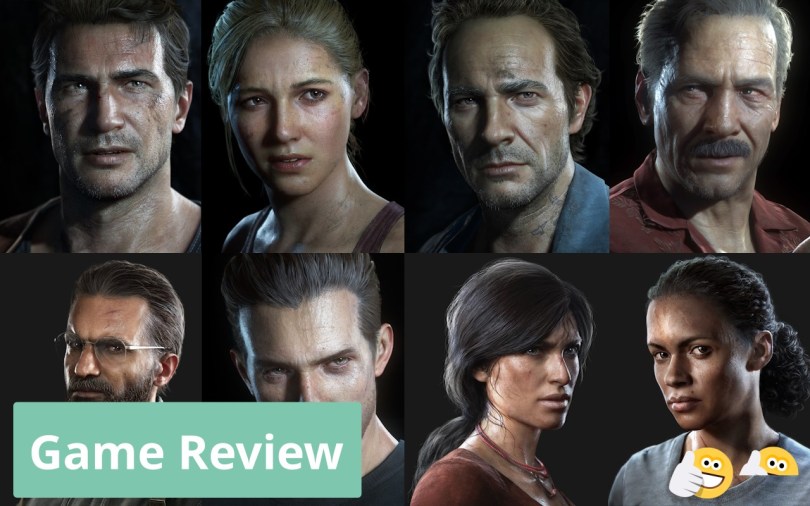
Uncharted – The Legacy of Thieves Collection Review (PS5 + PC)

In my review of The Nathan Drake Collection, I hinted at wanting to play the Legacy of Thieves Collection at some point. That day has come, or rather has passed, and I have some thoughts about Uncharted 4: A Thief’s End and The Lost Legacy.

Both titles were unmistakably Uncharted games and improved on many aspects of the previous trilogy. The biggest one pertained to the controls, which were more accurate in the fourth entry of the series and its spinoff. This eliminated all the unintentionally hilarious deaths I frequently endured in the first three titles. Combat also benefitted greatly from these improvements and was more precise this time around. Thanks to the PlayStation 5 overhaul, stable high framerates and the inclusion of Dual Sense controller features made for a more fluid and immersive gameplay. The PC version reached even higher framerates elevating the feel of gunplay further.

Despite all the mechanical grievances being eliminated, Uncharted 4 still contained moments of downtime. Naughty Dog’s trademark storytelling and character moments were stretched to their limits on a couple of occasions. These moments no doubt accurately captured the mood of the situation. This is undeniable. I only wished the writers would have opted for a more concise presentation to make it more delightful. Long-winded traversal and climbing sections slowed down progress and put a damper on the enjoyment more than necessary. This sentiment does not apply to the Lost Legacy, however. Its pacing was without complaint while still managing to deliver strong character moments that portrayed the human side of Chloe and Nadine and their relationship.

On the other side of that ancient coin were these high-quality character interactions emanating from this design and gameplay decision, something we have come to expect from contemporary Naughty Dog games. The tenuous relationship between Nathan and Elena, the love and admiration between the two brothers, and the friendship of the group and Sully; all were exceptionally well written. That even extended to Nadine, one of the two antagonists. In typical Uncharted fashion, the primary adversary was just a bad dude. Arrogant and spoiled. A rich douchebag. Someone to dislike.

Read More »

Are Game Discounts Bad Or Should You Pay Full Price?

I regularly watch a YouTube channel named SkillUp and listen to several IGN podcasts for weekly video game and gaming-industry-related news and updates. Almost every week since 2024 started, the weekly shows have contained reports about layoffs throughout the gaming industry. Many were due to bad management or lackluster sales of mediocre and unsuccessful titles. Around 7000 people have already lost their jobs in the first two months of this year alone, following up the more than ten thousand last year. This is compounded by the fact that game development is becoming an ever-growing financial undertaking. From recent leaks and the legal battle between Sony and Microsoft, we know that PlayStation’s last AAA first-party masterpieces have broken through the 200 and 300-million-dollar production cost barrier.

The more I think about it, the more I ask myself whether I should be looking for deals rather than paying full price. Relying solely on discounts is incredibly hypocritical of me as I am predominantly a PC gamer. A PC gamer with a very costly gaming computer, I am sad to admit. And despite having the cash for all that fancy hardware, I constantly look for discounts rather than accepting the full price for a video game. How does that make sense? Isn’t that salt in the wounds of all those talented developers and artists who lost their livelihoods? Am I part of the problem and equally despicable like the handsomely paid CEOs who gamble with the lives of their employees in their relentless chase for a slice of that shiny live-service money? I shudder to think what will happen to Rocksteady after the unfortunate release of Suicide Squad.

I will rethink my approach to game purchases, but I alone will not even make a dent. It’s a conscience thing more than anything. It requires more people to do the same and also changes in the industry. Are development cycles that now span the typical lifetime of a console generation sustainable in the long run? Who, other than full-time game reviewers or streamers, maybe, is supposed to have the time to repeatedly spend 100 hours on every single game because the new norm for AAA releases is to be a gigantic time sink? Why do we need countless hours of filler content? Aren’t shorter, more focused games of 40 hours not more affordable and more uncomplicated to produce? I often feel bad for skipping so much side content because the main story is so engaging or because the side content is not entertaining enough. Sometimes, I want to finish a game because I have already spent so much time in its world that I am ready to move on. That means I skip on content somebody put their sweat and tears into to produce. It feels wrong, yet I want to experience more of the many great titles released yearly, not more of a single one. Maybe it is an attention span issue of mine. I do not know. All I see is budgets skyrocketing and people losing their jobs.

As a passionate gamer and a software developer, I can only hope the gaming industry reaches an equilibrium soon. These massive waves of workforce reductions and studio closures must stop. The industry needs a sustainable approach to high-quality, high-profile cinematic experiences so we can continue playing these incredible stories and even more of them. Studios also need a way to try something new, to take a risk without fear of the loss of everything. I immensely enjoyed Immortals of Aveum, but Ascendant Studios did not ascend far with their first game. If this industry only knows the two extremes of blinding success or heartbreaking disaster, it will become harder and harder for creative minds to take the plunge and dare raise funds to create something new.

Now, these thoughts mainly apply to high-profile releases. However, the concept of paying full price is even more applicable to double-A or indie productions. Smaller studios need all the money they can get without a giant publisher backing the development.

This is a complex topic with many more points I could discuss if I invested more time. Despite that, I said what I thought was necessary, and I will end this post on that note.

I apologize for the downer. These thoughts did not let me go.

Thank you for reading this sad gamer’s tale.

PS

The header image was created by Microsoft’s Copilot with a minor edit job from me using the following input:

“create an image of a video game store with a bargain bin full of discounted video games next to a stand of triple-a full price titles”
Starfield Review – Jack Of All Trades, Master Of Some (PC)

Microsoft desperately needed a win after all the negative press surrounding its Xbox gaming brand in 2023 and the year before. 2022, in particular, needed major first-party releases as many titles were pushed further into the future. When one of those much-anticipated games finally arrived, it was a stake in the heart of a vampire. Redfall’s release in May was a disaster, and all eyes were now on Starfield, Bethesda Game Studio’s space opera and first new IP in ages. “Skyrim in space “was the most succinct description that was even given by the game’s director.

I like Skyrim, and I enjoy science fiction in space. The more Bethesda revealed about the game, especially in its Starfield Direct presentation, the more my interest was piqued. It went so far that I took advantage of AMD’s sponsorship deal that bundled a Radeon graphics card with the game’s Premium edition. It was actually the only way for any of the current-gen GPUs to be a sensible purchase. Based on early benchmarks, it also was a necessary upgrade from the RTX 3060 to get an enjoyable performance in this game. Although the performance at launch was still imperfect, it ran well most of the time outside major cities.

The game itself was, in many aspects, a typical Bethesda title, offering more of the gameplay loop that we all have come to enjoy. But Bethesda’s ambitions have been grand, vast as the depths of space, so they have added 1000 planets for players to explore. Could we be talking about illusions of grandeur instead?

Regarding scope, Bethesda’s games have always offered the player an enormous amount of content worth several hundreds of hours if you wanted to. Starfield’s 1000 planets certainly have that potential, although I doubt it would be exhilarating. Worlds only contained a low, curated (maybe randomized) number of locations of interest, and traveling between them was… a perfect opportunity to listen to space podcasts. And even those locations existed primarily for looting purposes. If you love the gameplay loop, all the power to you. If I remember correctly, I have only visited and explored planets during the events of a quest. Therefore, take my words with a grain of salt.

The big story questlines were where Starfield shined, not the number of planets or auxiliary game systems. Combined with the addictive Bethesda storytelling, looting, fantastic art design, and entertaining combat, I had a delightful time. However, it is essential to know what to expect from Starfield. It could have been a better space exploration game. But it was a terrific story-based first-person shooter with RPG elements Bethesda-style.

Performance was a mixed bag, and it still depends on the hardware. Starfield prefers AMD graphics cards and Intel processors. Big cities like New Atlantis or Akila will murder low-end CPUs, and performance dips must be expected. Indoor areas ran well, whereas outdoor regions varied based on the location (dense forest vs. barren planet surface). However, not all graphics options must be cranked to eleven to enjoy the artwork.

Read More »

Starfield PC Technology Discussion (Linux + Windows Benchmarks)

In my game reviews, I usually include a section I call “The Nerdy Bits” to examine a game’s technology. I have decided to separate this content from the game review to keep the size manageable. My Marvel’s Midnight Suns review showed me how an expansive technology section can inflate the blog post and maybe even distract from discussing the gameplay, the content, and the story, or potentially deter and intimidate readers because of the total length.

(This blog post is dangerously close to 3000 words 😉.)

I firmly believe that technology is a crucial aspect of a video game. Still, sometimes, I can get carried away and focus too much on it. Other people may not be as interested in that or as curious as I am, and they prefer an overview of the gameplay and a brief summary of the visual fidelity.

For me, a lousy running game can break the immersion. Take Elden Ring on the PlayStation 5, for example. My sister bought the game and thinks it runs fine, like many others who believe it to be the greatest thing since sliced bread. I took a 10-second look, turned the camera around one time, and concluded it ran like crap, and I did not want to play this way. Playing for ten to fifteen more minutes solidified this initial perception. This technology discussion is for gamers like me who are also interested in the technical aspects of a video game and base their purchasing decisions on that.

With this explanation out of the way, let me discuss what I think of Starfield’s technology. I will touch on the art style, the visual fidelity and technology, audio, and performance on Windows and Linux.

Please note that this is not a Digital Foundry-level inspection. For that, click here and here.

Read More »