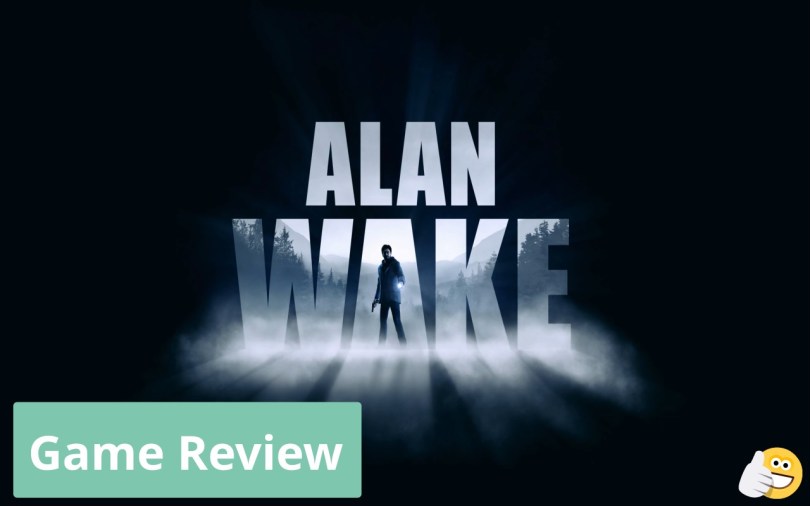
The gamer thought he knew what to expect. After all, he had watched a playthrough of the Xbox 360 version so many years ago. In truth, he had no idea.
Alan Wake had been a successful game. It sold over three million copies. Critics loved it. Players loved it. There was a huge fanbase around it. Still, the remastered version was slightly less well-received. It was a technological overhaul, more suitable for modern systems, while the gameplay was still the same old same old.
As the gamer fought his first battles, a realization set in. The controls were clunky, even odd at times. He had to retrain his brain to make things work. Dodging and sprinting were activated by the same key. „Why would the game do such a thing?“, the gamer wondered. The way he controlled Alan was unlike anything he had ever played. Alan was a writer, not a superhero. He was less athletic than a boulder chasing a famous fictional adventurer through narrow caves. Running was a futile endeavor. Any such attempt was quickly responded with heavy panting by the protagonist, Alan Wake.
The game did not want to be fast-paced, did not want to be a shooter. It was a supernatural mystery thriller with action elements. The beam of Alan’s flashlight was the game’s version of a reticle. The gamer thought this was a clever idea. He also didn’t like it as it made him feel vulnerable, not always in control. That’s what the game wanted him to feel.
Not in control.
Helpless.
The game’s story evoked similar feelings on an intellectual level. It was deliberately convoluted. It contained a meta narrative that foretold the story while the gamer experienced it on screen. He was dreading the moments of instense combat the game foretold. But how much of it was real? Was any of it real? This was unlike anything the gamer has seen before. He was wondering how the pieces fit together, how it all made sense. Would there be a happy ending?
Not in the know.
Clueless.
Read More »











 The Codeslinger