If you strongly believe in video game reviews, you likely took a wide berth around The Order 1886 when it was released in 2015. Metacritic says this game is not good, scoring 63 from critics or 6.8 from user reviews. Since I did not own a PlayStation then, I knew of the game but took little notice otherwise. I was only recently reminded of its existence by John Linneman from Digital Foundry as he revisited the game’s technology in 2023. And obviously, it piqued my interest.
The Order 1886 is a 3rd-person cover shooter like the Gears franchise and is equally story-driven. It also pushed the graphical fidelity like the Gears games usually do. So why did it fail?
It admittedly had a few shortcomings, like a story that seemingly ends prematurely and plenty of cutscenes that limit the player’s agency. At least the last part is a criticism that was also directed at Final Fantasy XVI, yet most people still loved it. The story aspect appears valid, but it’s also in the eye of the beholder. It depends on your expectations going into the game – or any game at all. The Order 1886 does not explain everything and leaves many questions open. It was clearly designed to have a successor, which might have allowed the developers to establish more of the backstory. But is that such a bad thing as long as the moment-to-moment action is coherent and enjoyable? I do not think so, which is why I liked The Order 1886.
The Nerdy Bits
I will try to keep it short this time, unlike in my Final Fantasy XVI or Marvel’s Midnight Suns reviews. I have linked to the Digital Foundry video in the intro, but if you have not already watched it, now is the perfect time. Here is another opportunity for you to click.
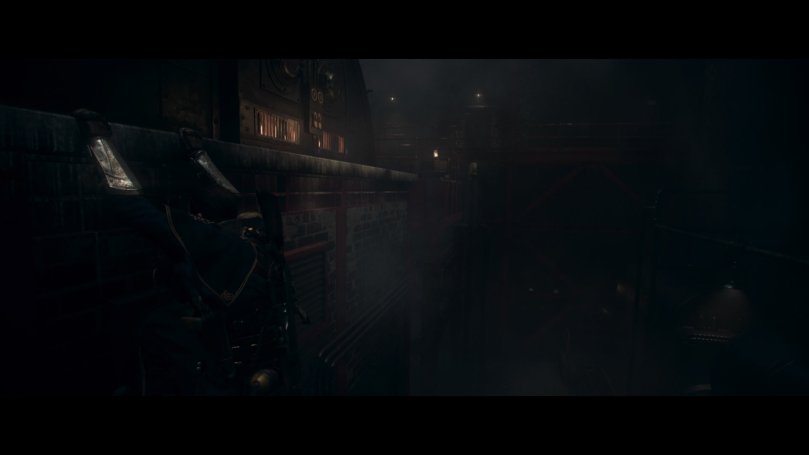
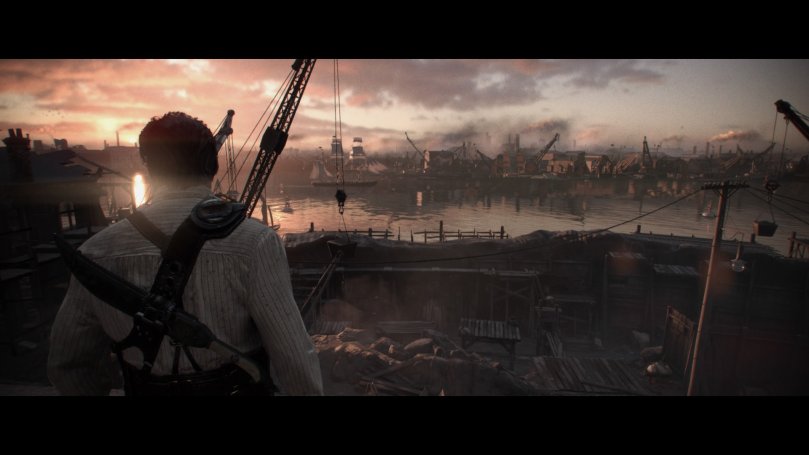
To put it short, The Order 1886 looked impressive – even more so for a game that is eight years old. Everything I mentioned about Final Fantasy XVI’s texture material work also applied to The Order 1886. It did not matter where I looked. Cloth, stone, metal: everything was a convincing facsimile of the real thing. Even the world detail was on par with FF XVI. I would even give The Order 1886 the edge here because it was more coherent throughout. Final Fantasy contained several less detailed areas than the central story locations. Owing to its smaller scope and level design, The Order 1886 could keep up the high amount of detail from start to finish.

The same high quality was applied to the direct and, especially, indirect lighting. I never felt that something looked odd or out of place. Dark alleyways, apartment interiors, warehouses, mansions, anything. The game just looked damn fantastic.


Character and facial animation were equally convincing.

The game’s only flaw was its low resolution and the 30 fps cap – an inheritance from the PS4 era. It is a real shame that this title will never be enhanced to take advantage of the PlayStation 5 hardware. It would greatly benefit from a full 16:9 aspect ratio and fluid 60 fps gameplay.
As you may know from my other recent reviews, I greatly appreciate a good audio presentation. I think this game was better than Final Fantasy XVI in this regard. Now, I understand that a sword is different from a gun.
(duh)
But other games have shown that even blade combat can produce punchy, engaging sound effects. FF XVI did not, but The Order 1886 did. Gunshots sounded and felt powerful. But it wasn’t all booming through the subwoofer. There was a pleasant nuance to it I was sorely missing in Final Fantasy.
This was such a story and cutscene-heavy game that on-point voice acting was necessary – and it was superb. An especially outstanding performance was the Lord Chancellor. Paul Gregory applied such a peculiar rhythm and emphasis on words at the end of sentences that was extraordinary, and, having no clue how people spoke in 1886, so accurate for the time. At least, I tell myself that. He undeniably allowed his character to speak with absolute authority. The others were no slouches either. Consider this: Yuri Lowenthal, the current Peter Parker in Insomniac’s Spider-Man, and Laura Bailey, who only did “additional voices”, were merely supporting actors.
The Order 1886 had a great VA cast. Period.
(I think saying “Period” in a video has a more significant effect than writing it. Ah well…)
Gameplay
Regarding gameplay, The Order 1886 did not reinvent the wheel in any shape or form. It actually took away one element that I would consider standard in 3rd-person shooters: the dodge-roll. But apart from that, the game was a cover shooter like many others before or after, which garnished the experience with many quick-time events.

It also had a stealth mechanic and one or two missions that required me to be silent. Other than that, it was standard fare.

But that does not imply that it was bad. I prefer games that are not needlessly complex, especially shorter ones. I hate relearning the control scheme when I am away from a game for a week or two. Is anyone complaining about the Gears franchise? The Order 1886 even included a bit of Tomb Raider-style ledge-climbing. Although this provided for occasional variety, I think it was the only element out of place in this game. It did not hurt, nor was it terrible, mind you.
However, this does not mean that the gameplay is without its flaws. The game contains several crucial areas where you must fend off waves of a seemingly never-ending stream of enemies. Those were really challenging and sometimes frustrating moments, emphasized by my arch-nemesis, the controller implementation.
Form should usually follow function, but game developers often decide that form, or the visual presentation, is more important than the function. I want a shooter to be snappy and precise and not smooth the camera motion for cinematic purposes. I voiced my anger in a separate blog post, and I have quit games for this reason. Since I have paid money for The Order 1886, I wanted to finish it, of course. It also helped that it was a short experience of not even ten hours. Controlling the character felt heavy and imprecise in shootouts. Granted, the main protagonist is not a nimble archer. But I would still separate deliberate and slow character movement from the camera controls.
With that little rant behind me, let me say that this does not destroy the gaming experience. I just really wished for more responsive and accurate camera movement. Returning to the wave mechanic, I feel this is the game’s replacement for a (mini)boss fight. More accurate controls would have probably made these encounters more enjoyable and turn them into a skill-challenge instead of a difficulty-challenge.
As I will explain in the next section, The Order 1886’s story revolves around humans fighting werewolves. I found myself in two head-to-head encounters with such ferocious foes. The game switches to a combat style reminiscent of The Callisto Protocol.

It is mainly QTE-driven for evasion, with a short window of opportunity to perform an attack. Although I do not have a better idea – and I am not a game designer – this did not do it for me. It looked cool and would perhaps be fun to watch on YouTube, though.
Story and Characters
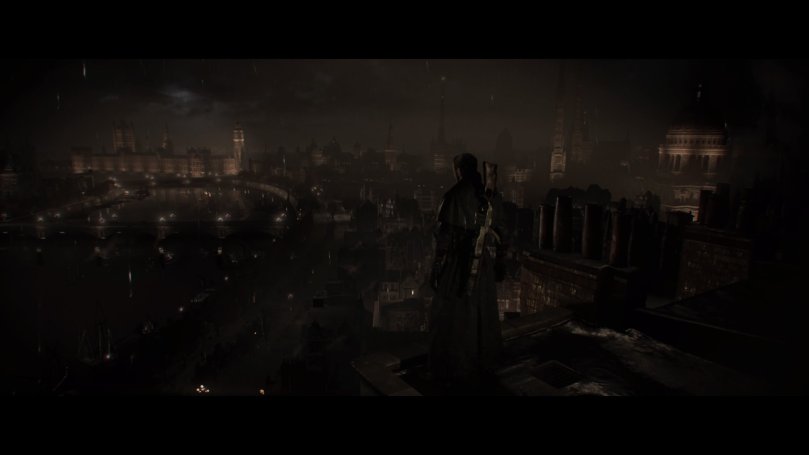
As the name suggests, The Order 1886 took place in the year 1886 in London. The game rewrote history a little bit and included a few elements of Fantasy. I encountered Nikola Tesla and, as already mentioned, lycans. And what are werewolves without vampires? Lonely, of course, so they played a role, too. In a few ways, the setup was comparable to the Underworld movies. However, I did not constantly fight lycans, which I think was a smart choice. Interactions with these Wolverines were scarce, and the story’s focus was on a conspiracy within the ranks of The Order. This created a sense of tension and anticipation and made encounters more meaningful.
This dark and gritty time was reflected accurately by the visual design.
(I am simply using this opportunity to add more screenshots.)

The story is nothing to rave about, but it is not bad either and definitely well told. And the game really shines in this aspect. I was captivated by the graphics and how the story was presented to me. I wanted to know what was happening and what led to the main character’s situation at the start of the game. All the technical elements propelled this aspect of The Order 1886 to the next level. I like games that focus on telling a story, and as long as it makes sense from moment to moment, I am okay to use my imagination to fill in the gaps or accept that there aren’t any answers (yet – ideally).
The Order 1886 certainly seemed to stop early, but I can also see why Ready at Dawn ended the game where it did. I do not know anything about the development history, and maybe it was a financial thing. From my perspective, the events that lead up to the ending make sense, and the epilogue is a setup for a (never-coming) successor.
Sadly.
Famous Last Words
It all comes down to one’s expectations of a game, movie, TV series, or anything. I expected a cover shooter with a focus on storytelling. Nothing more, nothing less. Except for outstanding visuals, of course. I wasn’t anticipating an emotional, deep, complex, and fleshed-out universe. I hoped to run around convincing bad people of their wrongdoing by flinging accelerated lead in their direction and having a good reason for it. I was not disappointed in the slightest. Ready at Dawn could have given more life to this world by making the collectibles more meaningful. I found newspapers worth reading (albeit difficult owing to the low resolution) and many random objects that were not.

There was no real point to the collectibles, which made exploration of the environments not really engaging. They were primarily small areas limited in scope anyway. I assume this was a concession to the PlayStation’s performance and available resources in 2015. I found this little nugget, though, which elicited a smile.

The Order 1886’s game design clearly took a backseat to the still breathtaking graphics. The game is obviously a corridor shooter and lacks any type of meaningful world-building that goes beyond what the story exposes.
Despite the controls, the only real negative aspect of this game, I had my fair share of fun, and it was a good palette cleanser after the giant Final Fantasy XVI. I think The Order 1886 is worth trying.
Let me make one final comparison to the Gears games, especially parts four and five: they also seem to end without a real ending 🤷.
Thank you for reading.
 The Codeslinger
[…] my review if you enjoy a vampire and werewolf […]
LikeLike